The SaaS CFO's Guide to Usage-Based Billing: 7 Mistakes That Leak Revenue

Usage-based pricing creates a direct connection between customer value and revenue. It also creates more opportunities for revenue leakage.
A missed usage event. An outdated contract rate. A failed card that never enters a recovery sequence. A processor fee buried in the monthly statement.
Each issue may look small. Across hundreds or thousands of accounts, the impact compounds.
Industry estimates vary, but SaaS finance teams commonly use 3% to 9% of revenue as a leakage-risk range for subscription and usage-based models. Usage-heavy businesses often face the higher end of that range. Treat the figure as an audit trigger, not a universal benchmark.
This guide gives you seven practical mistakes to check in your billing stack today.
Quick rule of thumb:
Revenue leakage rate =(Expected revenue − Collected revenue) ÷ Expected revenue × 100
Start With the Revenue Audit
Before reviewing tools, map the path from contract to cash:
- Contract terms
- Product entitlements
- Usage events
- Pricing and rating logic
- Invoice creation
- Payment processing
- Failed-payment recovery
- Reconciliation and reporting
For a sample of customer accounts, compare what the contract says, what the product delivered, what the billing system calculated, and what your business collected.
If those four figures do not align, you have a revenue-control problem.
Research from m3ter describes revenue leakage as revenue that is owed but never billed. Zuora’s CFO research similarly highlights fragmented systems, manual handoffs, and inconsistent usage data as major operational risks.
Mistake #1: No Smart Dunning or Failed-Payment Retry Logic
A failed payment is not automatically churn.
Cards expire. Banks decline transactions. Fraud controls block legitimate payments. Account limits change. These are often recoverable payment events, not customer decisions to leave.
Without smart dunning, your billing system may:
- Attempt payment once and stop
- Retry at an ineffective time
- Send generic reminders
- Fail to provide a clear payment-update path
- Cancel service before the recovery window ends
- Leave Finance without a recovery report
The result is involuntary churn and unnecessary write-offs.
CFO Audit Checklist
Review the last 90 days of failed payments:
- How many failed payments were retried?
- How many were recovered?
- How much ARR was at risk?
- How long did recovery take?
- Which decline reasons produced the best recovery rates?
- When does an account move from dunning to suspension or cancellation?
There is no single recovery-rate benchmark that applies to every SaaS business. Customer mix, payment methods, geography, price point, and decline type all matter. The important rule is simple: measure recovery by dollar value, customer cohort, and decline reason.
EasyPay Merchant Solutions supports subscription billing, recurring payments, dunning management, and smart retry workflows so your team can treat failed payments as a recovery process.
Mistake #2: No Usage-Based Metering
If your customers pay for seats, transactions, API calls, storage, credits, or other consumption, your billing system must capture and rate usage accurately.
A spreadsheet or manually uploaded file may work for early-stage testing. It becomes a liability when usage volume grows or pricing becomes more complex.
Common leakage points include:
- Usage events that arrive late
- Dropped or duplicated events
- Unbilled overages
- Incorrect usage tiers
- Missing minimum commitments
- Usage data that does not match customer entitlements
- Product metrics that Finance cannot access or validate
For usage-based or hybrid models, published estimates often place leakage risk around 4% to 9% of metered revenue, although actual results vary significantly by architecture and controls.
CFO Audit Checklist
Select 10 customer accounts and compare:
- Contracted usage terms
- Product usage records
- Billable usage events
- Rated charges
- Final invoice
- Collected payment
Then calculate your metering completeness rate:
Captured billable events ÷ expected billable events
A strong internal target is at least 99% completeness, with exceptions reviewed and documented. That is a control target, not a universal industry benchmark.
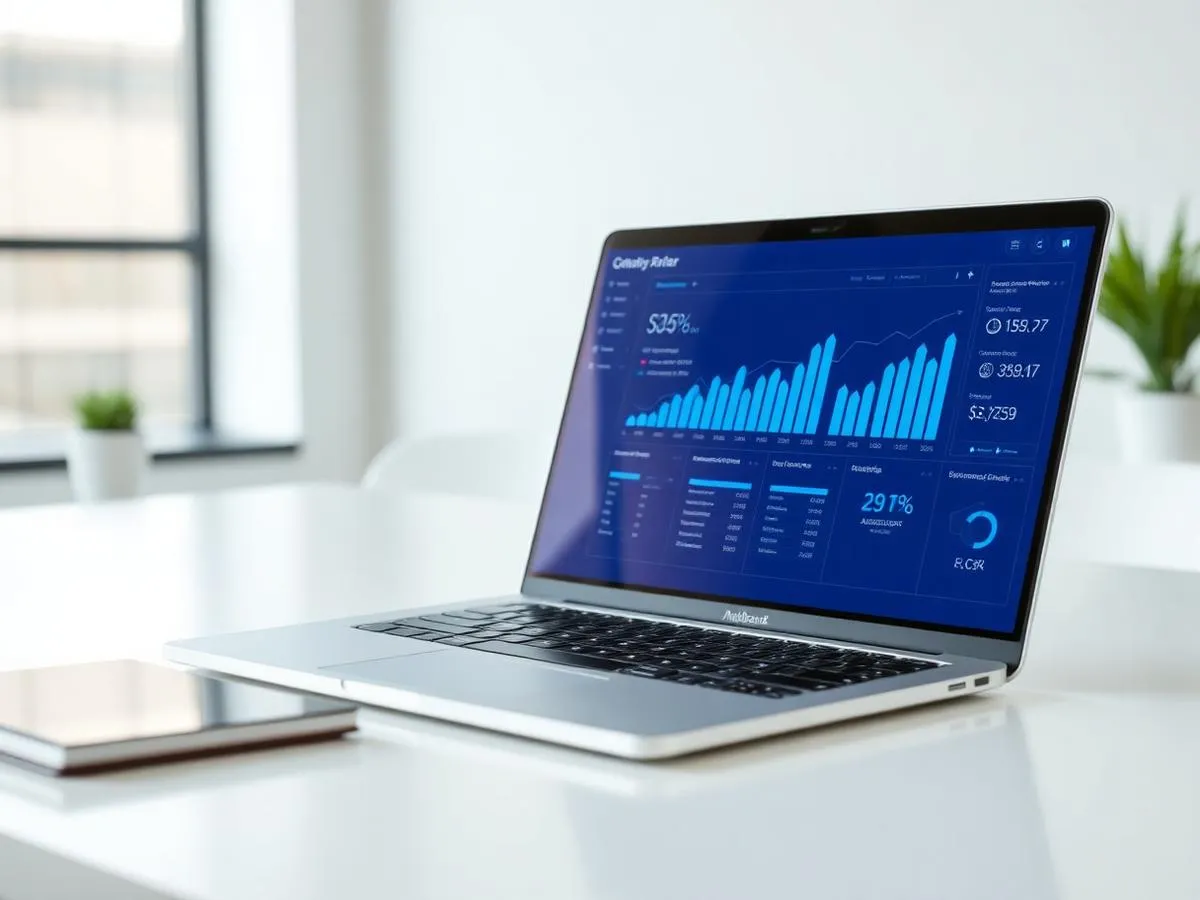
EasyPay’s SaaS processing solution supports usage-based metering, automated billing cycles, recurring payments, failed-payment recovery, and real-time reporting in one operating environment.
Mistake #3: Manual Invoice Reconciliation
Manual reconciliation is one of the clearest signs that your billing stack is not ready for scale.
Finance teams often reconcile data between:
- CRM records
- Contract files
- Product databases
- Usage exports
- Billing software
- Payment processor reports
- Bank deposits
- Accounting systems
Every CSV export, spreadsheet adjustment, and re-keyed field creates another opportunity for error.
The issue is not only employee time. Manual reconciliation delays close, obscures billing variance, and makes it harder to explain revenue to the board or auditors.
CFO Audit Checklist
Count the manual steps required to produce a monthly invoice and cash report.
Then ask:
- How many systems must be opened?
- How many files are exported?
- Who validates usage?
- Who approves pricing exceptions?
- Who confirms payments settled?
- Can you trace a collected dollar back to the contract and usage event?
A modern recurring billing platform should provide a reliable operational record across billing, payments, and reporting. EasyPay’s unified dashboard provides real-time analytics and centralized visibility, reducing the need to manage payment and billing data through disconnected tools.
Mistake #4: Poor Handling of Upgrades, Downgrades, and Proration
Subscription changes create revenue leakage when billing logic does not match the customer’s actual service period.
Common problems include:
- Upgrades taking effect one cycle late
- Downgrades remaining active after the billing date
- Proration calculated from the wrong date
- Credits issued manually
- Add-ons not reflected in the next invoice
- Annual commitments treated like monthly plans
- Discounts continuing after their expiration
These errors create two risks. You may underbill the customer, or you may overbill and create disputes, refunds, and avoidable support work.
CFO Audit Checklist
Test subscription changes across several scenarios:
- Mid-cycle upgrade
- Mid-cycle downgrade
- Add-on activation
- Seat reduction
- Annual-to-monthly transition
- Discount expiration
- Plan cancellation before renewal
For every case, verify:
- Effective date
- Proration method
- Credit treatment
- Invoice line items
- Payment amount
- Revenue reporting
Your billing rules should be defined once and applied consistently. Developer-first REST and GraphQL APIs can help your product, finance, and operations systems work from the same billing logic instead of relying on manual interpretation.
Mistake #5: Treating Failed Payments as Churn Instead of Recovery
When an account stops paying, many teams immediately classify it as churn.
That creates a reporting problem. You lose the distinction between:
- Voluntary churn
- Involuntary churn
- Temporary payment failure
- Customer-requested pause
- Billing dispute
- Account suspension
- Recoverable delinquency
These categories require different actions.
A customer who cancels because your product no longer fits their needs is different from a customer whose card expired. Combining both outcomes makes churn analysis less useful and can hide the performance of your recovery process.
CFO Audit Checklist
Separate your churn reporting into at least:
- Voluntary churn
- Involuntary churn
- Payment recovery
- Non-payment cancellation
- Disputed payment
- Reactivated account
Track the recovery funnel monthly:
| Metric | What It Shows |
|---|---|
| Failed payment value | Dollars initially at risk |
| Retry success rate | Payment recovery performance |
| Dunning recovery rate | Recovered dollars after communication |
| Recovery time | Days from failure to collection |
| Involuntary churn rate | Customers lost to payment issues |
| Reactivation rate | Customers restored after cancellation |
This gives Finance and Customer Success a shared operating view. It also helps your team determine whether the problem is customer fit, payment quality, or billing execution.
Mistake #6: Fragmenting Billing and Payment Processing
Billing software calculates what a customer owes. Payment processing collects it. When those systems operate separately without reliable synchronization, gaps appear.
Typical symptoms include:
- Invoices marked paid before funds settle
- Payment status not reaching the customer account
- Duplicate customer records
- Refunds handled outside the billing system
- Failed payments missing from Finance reports
- Usage charges calculated in one system and collected in another
- Payment fees excluded from margin reporting
A separate tool may be appropriate in some environments. The risk comes from weak integration and unclear ownership.
Your recurring billing platform and payment processor should work together across:
- Customer identity
- Subscription status
- Invoice status
- Payment attempts
- Refunds
- Disputes
- Settlement reporting
- Reconciliation

EasyPay Merchant Solutions connects subscription billing and payment processing through a unified platform designed for online, mobile, and modern commerce workflows. The result is less operational friction and more real-time control.
Mistake #7: Hidden Processor Fees Eating Margin
Revenue leakage is not limited to unbilled revenue. Margin can also leak through unclear payment costs.
Legacy processing statements may include:
- PCI compliance fees
- Statement fees
- Batch fees
- AVS fees
- Gateway fees
- Annual fees
- Non-compliance penalties
- Network and service add-ons
- Other miscellaneous charges
A small monthly fee may seem insignificant. Across multiple entities, products, and payment volumes, these costs reduce gross margin and distort customer-level economics.
CFO Audit Checklist
Calculate your effective processing rate:
Total processing cost ÷ total processed volume
Then compare it with:
- Contracted pricing
- Actual transaction mix
- Card-not-present costs
- Recurring billing costs
- Refund and dispute expenses
- Monthly account fees
- Settlement timing
EasyPay uses transparent flat-rate pricing with no hidden fees or junk charges. Pricing varies by business model, payment method, and configuration, so request a precise review rather than relying on an advertised rate.
Build a Billing Stack That Finance Can Trust
A strong SaaS billing operation should give you:
- Subscription and recurring billing
- Usage-based metering
- Automated invoicing
- Smart payment retries
- Dunning management
- Upgrade, downgrade, and proration controls
- Real-time payment and revenue analytics
- Unified reconciliation visibility
- Transparent processing costs
- Developer-first REST and GraphQL APIs
- PCI DSS Level 1 security standards
Security matters just as much as revenue control. A payment platform should reduce the exposure of sensitive card data and support a documented compliance process. EasyPay Merchant Solutions is PCI DSS Level 1 certified and provides infrastructure built for dependable recurring payment operations.

Your 30-Day Billing Leakage Audit
Use this practical sequence with your Finance, Operations, Product, and Engineering teams:
Week 1: Map the flow
Document every step from contract signature to collected payment. Mark every spreadsheet, export, manual approval, and system handoff.
Week 2: Test customer accounts
Select a representative sample across plans, pricing models, and customer sizes. Recalculate expected charges and compare them with invoices.
Week 3: Measure recovery and margin
Calculate:
- Revenue leakage rate
- Invoice accuracy
- Metering completeness
- Failed-payment recovery
- Involuntary churn
- Effective processing rate
- Billing lag
Week 4: Prioritize fixes
Fix the highest-value leaks first. Usually, that means missing usage charges, failed-payment recovery, pricing mismatches, and unnecessary processor fees.
Your goal is not another report. Your goal is a billing engine that captures earned revenue, recovers valid payments, and gives Finance a clear operating view.
Protect More Revenue With Less Friction
A scalable SaaS business needs more than a billing tool. It needs connected billing, metering, payment processing, recovery, and reporting.
EasyPay Merchant Solutions provides an enterprise-grade saas billing software environment for subscription companies that need reliable recurring payments, usage-based pricing, smart dunning, transparent fees, and real-time visibility.
Request a demo or review your current processing statement. Our team typically responds within 24 hours.